Leave Your Message

How to Choose the Best Wire Cable Wire Supplier in China

Choosing the best Wire Cable Wire supplier in China requires more than comparing unit prices. It demands evidence.

Grand View Research estimates that the global wires and cables market will continue expanding through 2030, driven by renewable power, data centers, electric vehicles, and grid modernization. The International Energy Agency also reported that global electricity demand is entering a stronger growth period, increasing pressure on transmission and distribution networks. These trends create opportunity, but they also expose weak suppliers quickly.

A credible supplier should provide traceable copper or aluminum sources, consistent conductor resistance, insulation test records, and production samples. Ask for factory audit evidence, not polished photographs. Request certificates linked to recognized standards, such as IEC, UL, RoHS, or applicable national requirements. A reliable manufacturer should explain its testing equipment, batch controls, delivery history, and corrective-action process.

Christopher Guerin, Chief Executive Officer of Nexans, has described electrification as “the backbone of the energy transition.” His point matters here: cable quality affects safety, efficiency, installation time, and long-term operating costs. The cheapest offer may become expensive after voltage loss, damaged insulation, or delayed replacement.

Look closely at the details. Can the supplier maintain conductor diameter across repeated batches? Are cable drums sealed against moisture? Does the factory test finished products before shipment?

Not every report agrees.

Market forecasts use different definitions and assumptions. Buyers should compare evidence carefully, rather than trust one impressive number. Supplier selection is partly technical, partly commercial, and partly a judgment call. That last part deserves more scrutiny.

How to Choose the Best Wire Cable Wire Supplier in China

Define Your Wire Cable Requirements and Application Conditions

Before choosing a wire cable supplier in China, define the cable’s actual working conditions. State the required conductor material, cross-sectional area, insulation type, voltage, current, and length. Also describe whether the cable will serve machinery, outdoor equipment, control panels, or moving systems.

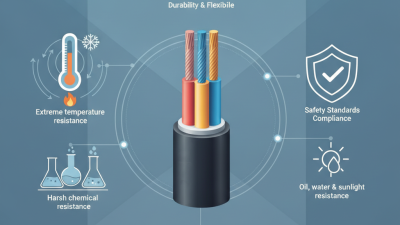
Temperature, moisture, chemicals, vibration, and bending frequency can change the specification. A cable installed beside a hot motor needs different insulation from one used inside a dry cabinet. Measure twice. Small details matter. If the cable moves daily, provide the minimum bending radius and expected movement cycles. For outdoor use, request resistance against sunlight, rain, and temperature changes.

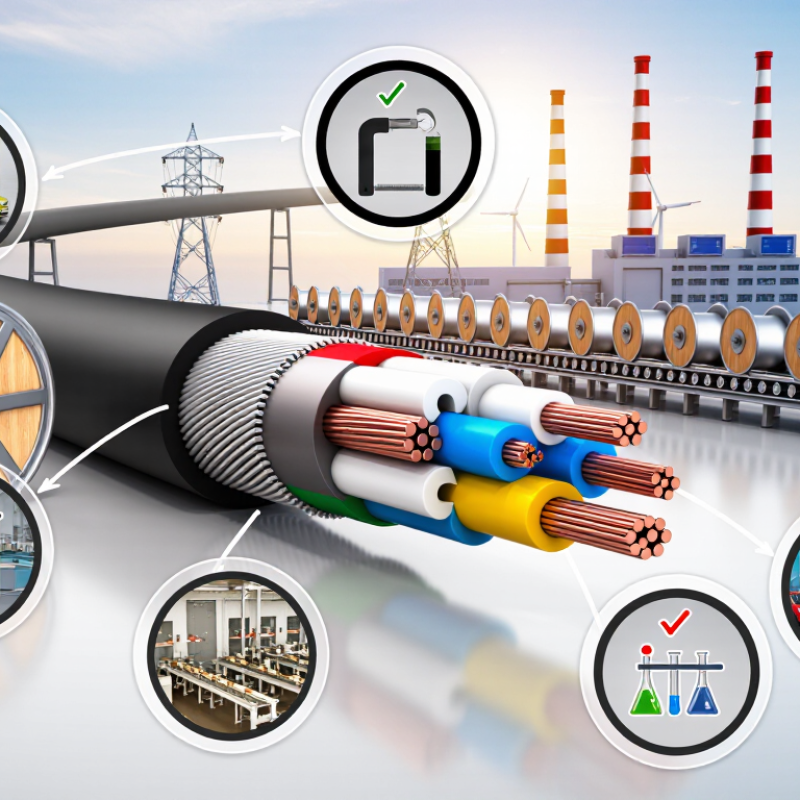
Ask potential suppliers for drawings, test reports, material details, and production samples. Check whether their stated dimensions match the sample, not only the quotation. A clear inspection plan should cover conductor resistance, insulation thickness, tensile strength, and high-voltage testing. In practical sourcing work, photographs of cross-sections often reveal uneven insulation or excessive filler.

Do not rely on a general phrase such as “high quality cable.” Specify acceptable tolerances and packaging conditions. A neat spreadsheet can still hide an important weakness. I once overlooked installation space, and the selected cable was electrically suitable but too stiff for the equipment. That mistake was avoidable. Share the installation environment, approval requirements, delivery quantity, and expected service life before requesting a final offer. A technically experienced supplier should ask questions, identify risks, and explain where your initial requirements may need adjustment.

Evaluate Supplier Product Quality, Certifications, and Manufacturing Capabilities

How to Choose the Best Wire Cable Wire Supplier in China

Product quality should be checked beyond surface appearance. Request conductor resistance, tensile strength, insulation thickness, and aging-test records for each cable type. IEC 60228 defines conductor classes and resistance requirements, making laboratory results easier to compare. Ask for samples from current production, not only polished samples prepared for sales meetings.

A small detail matters: measure the copper cross-section after stripping the insulation. Some suppliers meet length requirements but reduce conductor weight. That can create heat, voltage loss, and early failure.

Certifications need careful verification. The ISO Survey 2022 recorded 1,265,216 ISO 9001 certificates worldwide, but ISO 9001 confirms a management system, not automatic product quality. Check the certificate scope, issuing body, expiry date, and factory address.

For flame-retardant cables, review test reports against IEC 60332. For low-voltage products sold in regulated markets, confirm the required conformity documents and traceability records. A certificate is evidence, not proof.

Manufacturing capability should be visible on the factory floor. Review drawing machines, extrusion lines, spark testers, laser diameter gauges, and final inspection areas. Ask how often equipment is calibrated and how rejected reels are controlled.

A strong supplier can explain batch numbering within minutes. Request production capacity by cable type, lead time, minimum order quantity, and backup plans for copper supply. Industry forecasts often show rising cable demand, yet capacity claims can remain vague.

That is where buyers should slow down. Audit records, retain samples, and independent testing may reveal weaknesses that brochures hide.

Compare Materials, Technical Specifications, and Customization Options

Choosing the best wire cable supplier in China requires material evidence, not attractive catalogue photos. Copper provides about 100% IACS conductivity, while aluminum reaches roughly 61%, according to Copper Development Association technical data. This difference affects conductor size, weight, voltage drop, and terminal design. Ask for the alloy grade, conductor resistance at 20°C, insulation compound, temperature rating, and flame-test records. IEC 60228 also defines conductor classes and resistance limits. Numbers matter.

Technical specifications should match the working environment. For industrial cables, confirm voltage rating, bending radius, shielding, armor, oil resistance, and allowable current. IEC 60332 flame-testing requirements can support safer product comparisons.

The International Energy Agency’s 2023 report estimates that more than 80 million kilometers of power grids must be added or upgraded worldwide by 2040. Demand will grow, but quality cannot be assumed.

Request factory inspection records, batch traceability, and independent test results. Ask whether customization includes conductor stranding, jacket color, printing, cut lengths, connectors, and packaging. A sample run is wiser than trusting a spreadsheet.

A common sourcing mistake is treating one certificate as permanent proof. Certificates can expire. Specifications can also change after approval. I would compare the approved sample with mass-production material, then review resistance and insulation results again. That extra check costs time. It may prevent a costly mismatch.

Assess Pricing, Minimum Orders, Lead Times, and Shipping Services

How to Choose the Best Wire Cable Wire Supplier in China

A low price does not always mean lower production cost. Ask suppliers to separate material, tooling, testing, packaging, and shipping charges. In supplier evaluations, I compare copper content, insulation grade, tolerances, and quoted quantities line by line. A cheap offer may exclude testing or protective packaging. That creates expensive surprises later.

Minimum order quantities also deserve careful attention. A factory may request 5,000 meters, while your trial project needs only 800. Ask whether a smaller pilot order is possible and whether custom colors or markings change the MOQ. I once focused too heavily on unit price. That was a mistake. The unused cable occupied storage space and weakened the real savings.

Lead time should include production, inspection, and export preparation. Request a written schedule with sample approval dates and delay procedures. Then examine shipping services, including carton dimensions, loading photos, tracking, insurance options, and customs documents. Sea freight may reduce cost, but air freight can protect an urgent installation schedule. Do not accept “ready soon.” Request a specific dispatch date.

Tips: Compare three detailed quotations, not three headline prices. Confirm the cable specification with samples. Check whether the supplier has handled similar volumes. Keep a buffer of seven to ten days, because factory schedules sometimes shift. Ask for weekly updates during production. Also, calculate landed cost before choosing the lowest offer.

Verify Supplier Reliability Through Audits, Samples, and Customer Reviews

How to Choose the Best Wire Cable Wire Supplier in China

Choosing a wire cable supplier requires more than comparing prices. Reliability appears in records, materials, testing, and communication. A supplier may show polished photos, but factory evidence matters more.

Arrange a practical audit, either in person or through an independent inspection team. Check production lines, copper storage, insulation materials, testing equipment, and quality records. Ask how workers handle rejected cables. Request calibration certificates for testing instruments. During my supplier evaluations, small details often reveal more than presentations. For example, mixed material labels can signal weak inventory control. Do not ignore them. Still, audits have limits. A well-prepared visit may hide daily problems.

Order samples before signing a large contract. Measure conductor diameter, insulation thickness, flexibility, and resistance against your specification. Test samples under conditions similar to actual use. Keep sealed reference pieces for later comparison. One sample is not enough. Batch consistency deserves attention.

Tips: Read recent customer reviews across several independent platforms. Look for repeated comments about delivery accuracy, defect rates, and after-sales support. Ask the supplier for verifiable project references, then contact those customers directly. Be cautious when every review sounds perfect. Real performance usually includes a minor complaint or two. Also, request a written quality agreement covering inspection methods, tolerances, packaging, and corrective actions. Clear documents reduce misunderstandings, although they cannot replace regular monitoring.

How to Choose the Best Wire Cable Wire Supplier in China - Verify Supplier Reliability Through Audits, Samples, and Customer Reviews
Verification Dimension What to Check Reliable Evidence Suggested Benchmark Risk Signal Weight
Factory Audit Production capacity, equipment condition, process control, warehouse management, and traceability. Recent third-party audit report, production-line photographs, equipment list, process flow chart, and corrective-action records. Audit score of at least 80/100, with no unresolved critical findings. Restricted factory access or missing corrective-action records. 20%
Quality Management Inspection procedures for conductor diameter, insulation thickness, tensile strength, elongation, resistance, and appearance. Quality manual, inspection plan, calibration certificates, incoming-material records, and final inspection reports. Documented inspection at incoming, in-process, and final stages; calibrated instruments available. Testing is performed only after complaints or shipment delays. 15%
Product Compliance Conformity with the technical and regulatory requirements of the destination market. Applicable test reports, declarations of conformity, material declarations, and batch-level traceability records. Test documents match the exact cable construction, voltage rating, conductor material, and intended market. Certificate scope does not match the quoted product. 15%
Sample Verification Whether samples match the quotation in construction, dimensions, materials, color, printing, and packaging. Signed sample approval sheet, dimensional inspection record, electrical test report, and retained reference sample. Inspect at least three samples from different production lots when the order is technically important. Samples are hand-made or differ from the mass-production specification. 15%
Electrical Performance Conductor resistance, insulation resistance, dielectric strength, voltage rating, and temperature rating. Laboratory test results linked to the product code and production batch. All measured values meet the approved specification with documented test conditions. Only a general catalogue specification is provided. 10%
Delivery Reliability Ability to deliver consistent quantities within the agreed production and shipping schedule. Order history, production lead-time records, shipment records, and documented capacity-planning process. Target on-time, in-full delivery performance of at least 95% over the latest 12 months. Repeated schedule changes without written root-cause analysis. 10%
Customer Reviews Consistency of quality, communication, packaging, complaint handling, and after-sales support. At least three independently verifiable customer references or reviews from the latest 12 months. Feedback confirms stable quality and timely communication across more than one order. Only anonymous testimonials or reviews with no order context. 8%
Complaint Handling Speed and effectiveness of response to defects, shortages, incorrect labeling, or delivery issues. Corrective and preventive action reports, response-time records, replacement policy, and escalation procedure. Initial response within two business days and documented root-cause analysis for confirmed defects. Responsibility is shifted to the buyer before investigation. 5%
Commercial Transparency Clarity of quotations, minimum order quantity, tooling charges, packaging terms, payment terms, and validity period. Itemized quotation, signed technical specification, purchase contract, and clearly defined acceptance criteria. No unexplained fees or specification changes after sample approval. Low initial price followed by undocumented surcharges. 2%
Use the weight column to compare suppliers consistently. A supplier reaching 80 points or more out of 100 may be considered suitable for further commercial negotiation, provided there are no unresolved critical audit or compliance findings.