10 Essential Tips for Choosing the Right Electric Cable Wire
Choosing the right Electric Cable Wire is crucial for any electrical project. Jack Thompson, a respected electrical engineer, once said, "Selecting the right wire can make or break your installation." His insights highlight the importance of understanding the various types of cables available.
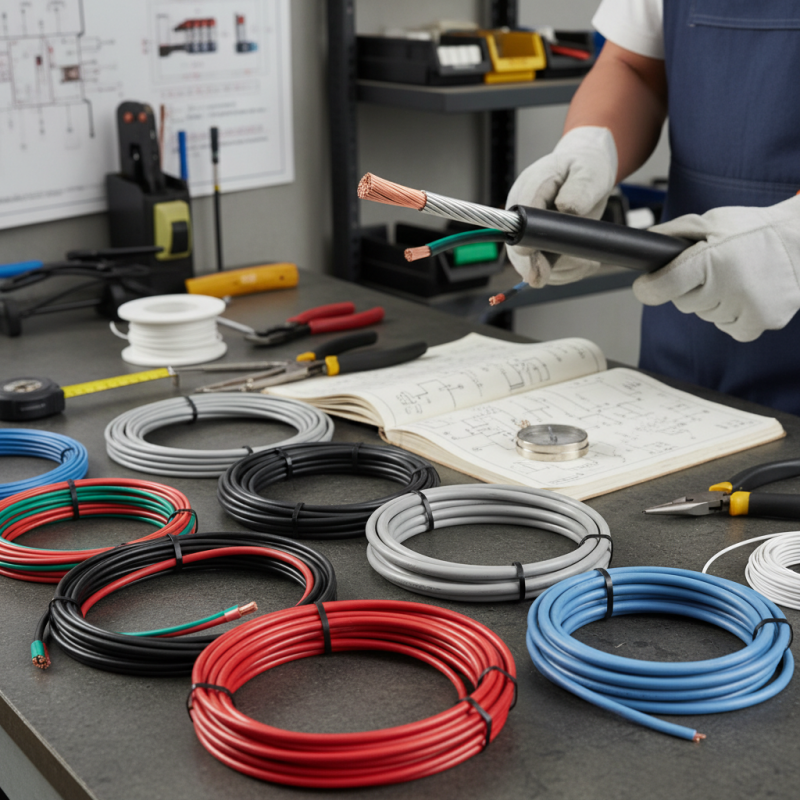
Electric Cable Wire comes in different sizes and materials, each suited for specific applications. For instance, copper wires are highly conductive, while aluminum wires are lightweight and more cost-effective. Choosing correctly can enhance performance and ensure safety.
Considerations extend beyond just the type of wire. The environment where the cable will be used matters too. Factors such as temperature, moisture, and exposure to chemicals can impact wire performance. Ignoring these conditions could lead to future complications. Making an informed choice requires research and awareness of potential pitfalls. Understanding these elements shows a commitment to your project’s integrity.
Understanding Different Types of Electric Cables and Their Applications
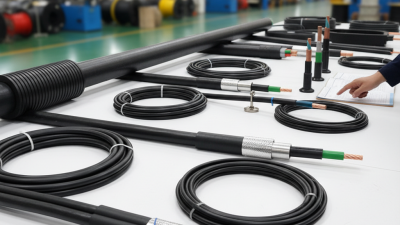
When selecting electric cables, understanding their types and applications is crucial. There are various types: single-core, multi-core, and shielded cables, each serving a unique purpose. Single-core cables are often used for electrical installations, while multi-core cables find their place in equipment wiring.
Tip 1: Consider the environment where the cable will be used. For outdoor settings, weather-resistant cables are essential. They withstand moisture and UV exposure better than standard cables.
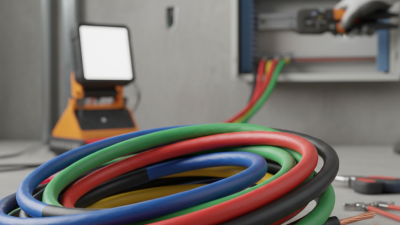
Tip 2: Take note of the cable's gauge. Thicker wires can carry more current but are less flexible. If you prioritize ease of installation, you might sacrifice amperage capacity.
Different cables serve diverse needs. For instance, shielded cables protect against interference. This is vital in environments with high-frequency signals, such as data centers. Yet, deciding which to use can be challenging.
Tip 3: Always check voltage ratings and insulation types. Incorrect choices can lead to safety hazards. Reflected by the cable's capacity to handle voltage, this choice impacts durability and reliability. Be thorough with your research to avoid common pitfalls.
Evaluating Cable Specifications: Voltage, Amperage, and Insulation Ratings
When selecting an electric cable wire, understanding cable specifications is crucial. Voltage ratings indicate the maximum voltage the wire can handle safely. If you choose a cable with a lower voltage rating than needed, it may overheat or fail. It's vital to match the voltage rating with your specific application. A little research can help avoid potential hazards.
Amperage, or current-carrying capability, matters greatly. Each wire has a limit to how much current it can carry without overheating. Exceeding this limit risks fire or equipment damage. Use a wire gauge chart to find the right gauge for your amperage needs. Remember, sometimes thicker wires are necessary for higher currents.
Insulation ratings protect against environmental factors. Different materials withstand heat, moisture, and chemicals better than others. Check if your cable will be exposed to extreme conditions. There can be a tendency to overlook these ratings, but doing so can result in costly issues later. Ensure the cable suits your environment. Prioritizing the right specs helps maintain safety and performance.
Considering Environmental Factors Impacting Cable Selection
When selecting electric cable wires, environmental factors play a vital role.
Consider the installation location. Are the cables going outdoors or indoors?
Outdoor cables must withstand UV exposure, moisture, and temperature fluctuations.
For indoor applications, focus on fire resistance and low smoke emission.
These factors can enhance safety and compliance with local building codes.
Also, consider the material of the cable insulation. PVC, for example, is common, but it doesn’t perform well in extreme temperatures.
In contrast, rubber or silicone insulation can offer better flexibility in harsh environments.
While it might be tempting to go for cheaper options, long-term reliability is paramount.
A low-quality cable might save money upfront but can lead to costly failures later.
Another essential aspect is the temperature rating. Cables must handle specific temperature ranges to function correctly.
Too much heat can degrade the wire, leading to insulation failure.
Think about where you live. Is the area prone to extreme conditions?
Addressing these elements can lead to a more informed choice.
Remember, a thoughtful decision about electric cables ensures safety and longevity.
Assessing Safety Standards and Compliance for Electric Cables
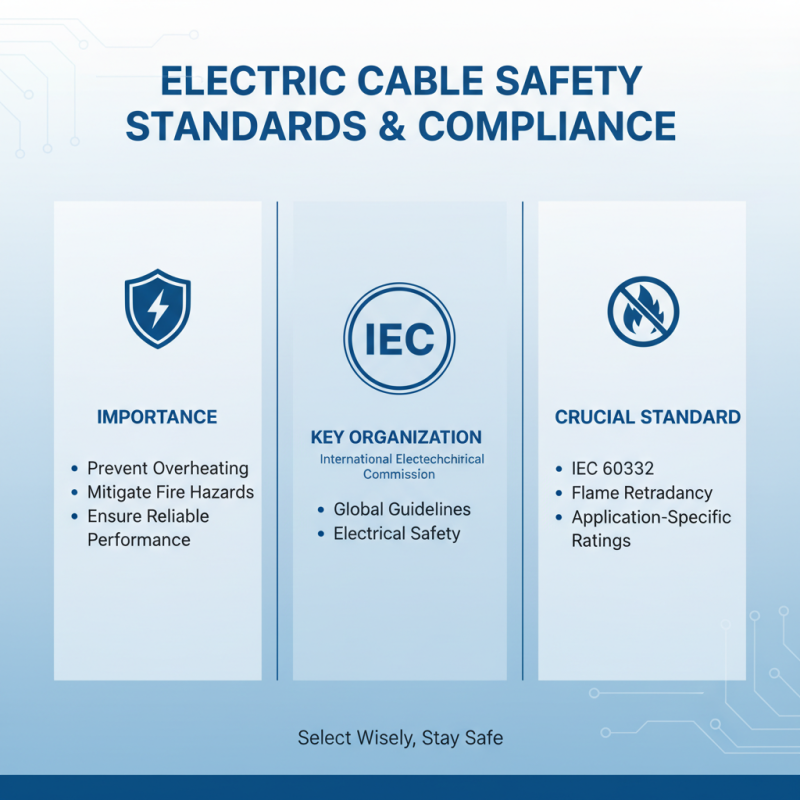
When selecting electric cable wires, safety standards and compliance are paramount. The International Electrotechnical Commission (IEC) outlines crucial guidelines. These standards ensure cables can handle their designated electrical loads without overheating or causing fires. Depending on the application, certain ratings must be met, like the flame retardancy tests specified in IEC 60332.
According to industry reports, around 30% of electrical fires stem from faulty wiring. This statistic highlights the necessity of choosing compliant cables. For instance, cables rated for high temperatures often feature heat-resistant insulation, reducing the risk of failure. Moreover, compliance ensures the materials used are non-toxic and environmentally safe, a consideration that should not be overlooked.
Inadequate attention to safety could lead to serious consequences. Many installations fail basic safety checks. Cables often become damaged during handling or from exposure over time. It's essential to regularly assess their condition. Some cables may even appear to comply but lack certification, undermining their reliability. Thus, verifying compliance through documentation is crucial.
Making Informed Decisions: Cost vs. Quality in Cable Selection
When it comes to selecting electric cable wire, the balance between cost and quality is crucial. Many choose cheaper options, thinking they are saving money. However, low-quality cables can lead to serious safety issues and costly repairs. Investing more initially may prevent potential hazards in the long run.
Quality cables often use better materials, which means improved durability and lower risk of malfunction. For instance, copper wires offer superior conductivity over aluminum, although they may be pricier. It’s essential to examine specifications like gauge and insulation types. A slightly more expensive wire can ensure optimal performance and safety.
Some people overlook specific needs. For instance, outdoor cables require weather resistance. These might cost more but provide the reliability needed for outdoor applications. Failure to consider your unique situation could lead to poor choices. Ask questions, research, and understand that the right cable is worth the investment. Quality should never be compromised for a lower price.
10 Essential Tips for Choosing the Right Electric Cable Wire
| Tip |
Description |
Cost Range (per meter) |
Quality Rating |
| 1. Assess Your Needs |
Determine the purpose of the cable to choose the right type. |
$0.10 - $0.50 |
4/5 |
| 2. Check Rating and Capacity |
Ensure the cable can handle the required voltage and current. |
$0.20 - $1.00 |
5/5 |
| 3. Consider the Wire Gauge |
Thicker wires reduce resistance but can be more expensive. |
$0.15 - $0.80 |
4.5/5 |
| 4. Evaluate Insulation Type |
Choose insulation that fits your environment (e.g., wet, dry). |
$0.25 - $1.50 |
5/5 |
| 5. Look for Certifications |
Check for standards like UL or IEC compliance. |
$0.30 - $0.70 |
4/5 |
| 6. Compare Supplier Options |
Get quotes from multiple suppliers for best pricing. |
$0.10 - $1.00 |
3.5/5 |
| 7. Factor in the Environment |
Choose cables suitable for temperature and moisture levels. |
$0.20 - $1.20 |
4.8/5 |
| 8. Read Customer Reviews |
Look for user feedback on performance and reliability. |
Varies |
4.2/5 |
| 9. Understand Warranty Policies |
Check if the product comes with a warranty for defects. |
N/A |
5/5 |
| 10. Plan for Future Needs |
Consider any future expansion or changes in load demands. |
$0.15 - $0.90 |
4.7/5 |